Reading is more than just being able to call words. One must also understand what he is reading. Interacting with books is an effective way to make meaning out of what one reads. One example of such interactivity with books is the strategy of using sticky notes while reading. Sticky notes can be used when reading both fiction and non-fiction texts. Students can use sticky notes when reading fiction stories to mark places in the text that they found interesting or exciting. They can also be used to mark connections that students make and questions they may have about that page. When reading expository texts, sticky notes are an excellent way to have students add to what they are reading by creating diagrams, asking questions, or marking a passage or fact that they want to share with others.
I came across an online version of note-taking on ReadWriteThink.org. This interactive tool allows students to organize their thoughts and notes while reading. I also discovered an informative website created by the Virginia Department of Education in which they provide videos of effective reading strategies being implemented. The sticky-note strategy is among their examples.
According to Stephanie Harvey & Anne Goudvis (2007), "active literacy requires readers to merge their thinking with information. Annotating in the margins and jotting thinking on sticky notes gives readers a place to hold their thinking and work through it as well" (p. 55). Harvey & Goudvis also noted that sticky notes provide an easy, accessible way to monitor their comprehension and leave a record of understanding what they're reading.
Researching this topic reminded me of the importance of interacting with books. I will take this renewed enthusiasm and knowledge and immediately apply it in my classroom. I will ask my students to use sticky notes during their independent reading time and will allow them to share with their classmates what they learned, found interesting, had questions about, or connected to during their reading.
Interacting with books is important for readers' comprehension of texts. Using sticky notes ensures that students are connecting with what they are reading instead of just passively experiencing books.
Harvey, S., Goudvis, A. (2007). Strategies that work. Portland, Maine: Stenhouse Publishers.
Wednesday, April 25, 2012

Saturday, April 14, 2012
Visual Perception Test
I used my husband as my subject for the visual perception test using a pen. I held the pen 2-3 ft. away from him and moved it from the crook of my arm to the end of my arm multiple times. I asked him how many of me he saw each time I did this. I had to remind him to focus on the pen several times, as he would slip and glance at me. Each time he answered that he only saw one of me. Afterwards, I had him perform the test on me, where I saw two of him when he held the pen closest to my face.
I asked my 10-year-old niece the questions on the child symptom checklist. She scored a 12 on the assessment, and therefore doesn't have excessive vision problems that should be addressed.
I asked my 10-year-old niece the questions on the child symptom checklist. She scored a 12 on the assessment, and therefore doesn't have excessive vision problems that should be addressed.
Wednesday, April 4, 2012
eTextbooks
These textbooks would be useful for a high school Geometry teacher.
1. Course of Differential Geometry
2. Flexbooks: CK-12 Geometry
3. Flexbooks: CK-12 Geometry - Basic
4. Geometry Basics: Points, Lines, and Angles
5. Geometry: Analytical Geometry (Grade 10)
1. Course of Differential Geometry
2. Flexbooks: CK-12 Geometry
3. Flexbooks: CK-12 Geometry - Basic
4. Geometry Basics: Points, Lines, and Angles
5. Geometry: Analytical Geometry (Grade 10)
Thursday, March 29, 2012
eBook Reading Reflection
I recently read The Hunger Games by Suzanne Collins on my nook. I got this book on www.barnesandnoble.com.
I enjoy reading on my ebook reader for a number of reasons. First, I am able to carry many books with me at one time without the heavy burden. This is very helpful when traveling. Also, I particularly enjoy the "night" mode feature of text on my nook. It allows me to read in bed without needing a book lamp and bothering my husband. I also like how reading an ebook allows me to bookmark pages, just as a traditional book would. Other things I enjoy about reading ebooks are the ability to look up meanings of words by clicking on them, highlighting in non-fiction texts, being able to read when lying on my side, and being able to adjust the size and style of the font.
A drawback to reading an ebook is that it lacks the familiarity that traditional books do. Being able to flip to a particular page or section in the book is also more difficult. For instance, it's challenging to know exactly where the part you're looking for is located (i.e.- spatially knowing that the section you're looking for is in the "beginning" of the book).
Overall, I thoroughly enjoy reading ebooks and read almost exclusively on my nook ebook reader.
I enjoy reading on my ebook reader for a number of reasons. First, I am able to carry many books with me at one time without the heavy burden. This is very helpful when traveling. Also, I particularly enjoy the "night" mode feature of text on my nook. It allows me to read in bed without needing a book lamp and bothering my husband. I also like how reading an ebook allows me to bookmark pages, just as a traditional book would. Other things I enjoy about reading ebooks are the ability to look up meanings of words by clicking on them, highlighting in non-fiction texts, being able to read when lying on my side, and being able to adjust the size and style of the font.
A drawback to reading an ebook is that it lacks the familiarity that traditional books do. Being able to flip to a particular page or section in the book is also more difficult. For instance, it's challenging to know exactly where the part you're looking for is located (i.e.- spatially knowing that the section you're looking for is in the "beginning" of the book).
Overall, I thoroughly enjoy reading ebooks and read almost exclusively on my nook ebook reader.
Wednesday, March 28, 2012
Text Set
I would like to have more information for my third
graders on fish to go along with our animal group studies in Science.

2. Fish: Discover Series Picture Book for Children on Amazon (non-fiction)

3. Beautiful Fish (Volume 1) by Zuli Marino on Amazon


SC.3.L.15.1: Classify animals into major groups
(mammals, birds, reptiles, amphibians, fish, arthropods, vertebrates and
invertebrates, those having live births and those which lay eggs) according to
their physical characteristics and behaviors.
1. The Pout-Pout Fish by Deborah Diesen on Amazon (fiction)

2. Fish: Discover Series Picture Book for Children on Amazon (non-fiction)

3. Beautiful Fish (Volume 1) by Zuli Marino on Amazon

4. Fish by L.S. Matthews on Barnes & Noble

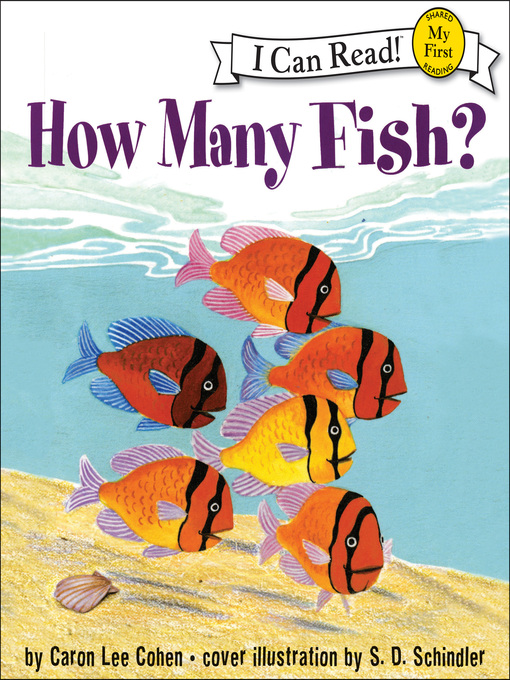
5. How Many Fish? by Caron Lee Cohen on Jacksonville Public Library
Wednesday, March 21, 2012
Storybird
I used Storybird to create a picture book about a girl named Katie and her adoration for the summertime. Storybird made it easy to create a picture book, despite my lack of creativity. :)
Katie Loves Summer on Storybird
Katie Loves Summer on Storybird
Saturday, March 17, 2012
Field Trip #2
For this assignment, I visited two reading tutoring sessions
at my school. Loretto employs a
part-time tutor who works with 3rd – 5th grade students
who struggle in reading and math. These
students were identified by our Principal and Assistant Principal as needing
remediation based on their performance on past standardized tests and report
card grades. Teachers also identified
students’ specific areas of need to be worked on. The tutor, James Watts, is from England and
has a degree in Elementary Education. He
works with students for 30 minutes on Mondays, Tuesdays, Thursdays, Fridays,
and non-early-release Wednesdays. The
tutoring sessions take place in our school’s conference room, where a long
table, chairs, white board, and SmartBoard are available.
During my visit, I observed Mr. Watts working with a group
of five 5th grade students on a reading lesson. His lesson focused on comprehension and
test-taking strategies, in preparation for the upcoming FCAT. The students independently read a passage and
completed several multiple-choice questions.
Then, Mr. Watts and the students re-read the passage together and went
over each question, discussing answer choices and the strategies the students used. The group completed several other passages of
various genres in the same manner.
The second tutoring session that I observed was Mr. Watts
working with a group of four 3rd grade students on a fluency
activity. These students read significantly
below grade level and were working with materials provided by a first grade
teacher. The group was shared reading a
short story, focusing on word decoding and self-check strategies. Afterwards, the students partner read another
short story while Mr. Watts assisted individual students. The session continued with additional work on
fluency strategies and practice.
All of the assessments that students complete while working
with Mr. Watts are kept in a file that is given to the students’ teachers and
kept for future use and documentation purposes (such as RtI meetings).
Mr. Watts uses materials provided by the school, such as reading
lessons from the FCAT Blast Off! workbook,
reading passages from FCAT TestMaker software, and various other reading practice
workbooks to aid in comprehension lessons.
Other materials used include sight word flashcards, books of various
genres, and individual white boards and markers for student use. He also uses materials such as the SmartBoard
for interactive games, PowerPoints, videos, etc.
Subscribe to:
Comments (Atom)